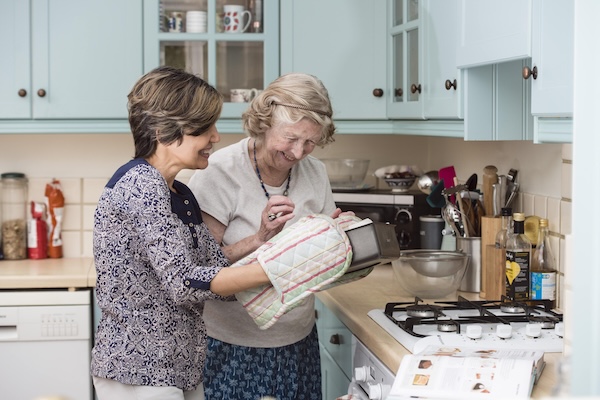
Live-in care after a stroke: Supporting recovery at home
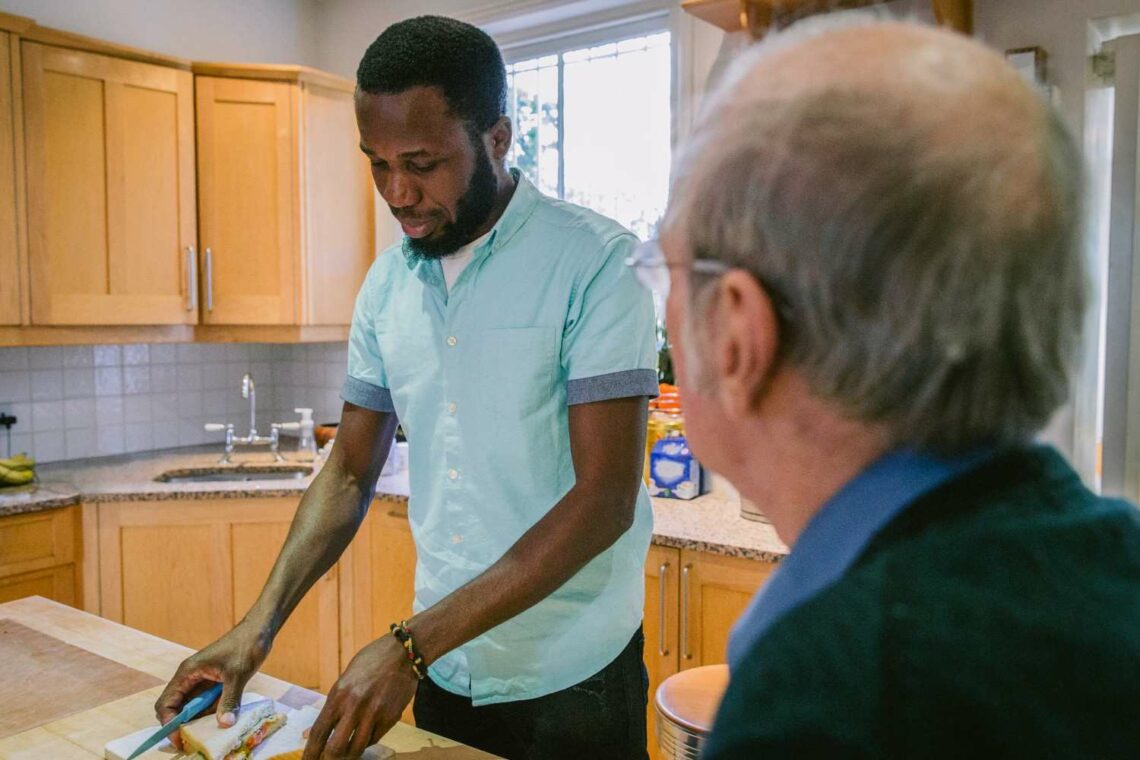
What to do if someone has a stroke: watch for the signs, act FAST, call an ambulance, put them on their side or in the recovery position, and stay calm.
When someone comes home from hospital after a stroke, the adjustment can be significant for them and for the whole family. There may be physical changes to manage, communication difficulties to navigate, and a great deal of uncertainty about what recovery looks like from here.
Live-in care after a stroke gives a person the one-to-one support they need to rebuild independence in familiar surroundings, rather than in a ward or residential setting. This guide explains what post-stroke care at home involves, what to expect from the recovery process, and how to find a carer with the right skills and temperament for the person you’re supporting.
Need Help Arranging Live-In Care?
Speak to our clinically-led team to find the right carer for your loved one. We'll guide you through costs, care options, and next steps.
Key insights:
- Live-in care after stroke provides one-to-one support at home, which many families find preferable to residential rehabilitation or a care home placement
- Recovery timelines vary significantly, and a carer trained in post-stroke support can adapt to changing needs week by week
- Common stroke-related needs include mobility assistance, communication support, help with swallowing difficulties, and emotional reassurance
- Hometouch carers working with stroke survivors receive specialist training and are supported by a clinical oversight team
- Funding options, including NHS Continuing Healthcare and Attendance Allowance, may help cover the cost of live-in care, and a professional assessment will confirm what applies to your situation
In this article
- What happens to the body after a stroke?
- Why do families choose live-in care after a stroke?
- How does a live-in carer support after a stroke?
- Stroke recovery: what to expect over time
- Stroke care at home vs a care home
- Funding live-in care after stroke
- Finding the right carer after a stroke
What happens to the body after a stroke?
A stroke occurs when the blood supply to part of the brain is interrupted, either by a clot or a bleed. Brain cells in the affected area are starved of oxygen and begin to die. The resulting changes depend on which part of the brain was affected and how quickly treatment was received.
Common effects include:
- Weakness or paralysis on one side of the body
- Difficulties with speech and language
- Problems swallowing
- Fatigue
- Changes in cognition or memory.
Some people also experience emotional changes, including depression and anxiety, in the weeks and months after a stroke.
No two strokes produce the same picture. One person may return home with relatively mild physical changes and recover quickly. Another may require substantial support with mobility, personal care, and communication for an extended period. A live-in carer trained in post-stroke support can meet a person where they are and adjust as their needs change.
The Stroke Association publishes detailed clinical information on stroke types, causes, and long-term effects, and is a reliable resource for families navigating this period. For a closer look at how strokes affect the body, including the different types and their likely consequences, Hometouch’s clinical overview covers the key points.
Why do families choose live-in care after a stroke?
After a stroke, people are often discharged from hospital into a rehabilitation pathway. That may include some community physiotherapy or occupational therapy input, but it rarely covers the daily personal care, mobility support, and emotional reassurance that many stroke survivors need at home.
For families, the question is often: who fills that gap?
Live-in care is one answer. A carer living in the home provides continuous, one-to-one support throughout the day. There is no handover between shifts, no unfamiliar face arriving at 7 am. The stroke survivor can follow their own routines, sleep in their own bed, and recover in the environment they know.
This matters clinically as well as emotionally. Familiar surroundings can support cognitive recovery and reduce the anxiety that often accompanies a stroke. A consistent carer relationship also means that changes in the person’s condition are noticed early and escalated appropriately. The period immediately after coming home from hospital is often when the right support matters most.
As Dimple Chandarana, Hometouch’s Head of Clinical Governance, explains:
“After a stroke, consistency of care is one of the most important factors in recovery. A live-in carer who understands the person, knows their goals, and can communicate clearly with the wider therapy team makes a genuine difference to outcomes.”
How does a live-in carer support after a stroke?
The support a carer provides after a stroke varies depending on the person’s level of need, but typically includes:
Personal care and mobility support
Helping with washing, dressing, and moving safely around the home. If the stroke has affected one side of the body, a carer can provide the physical assistance needed to maintain dignity while working towards greater independence.
Communication support
Some stroke survivors experience aphasia, a condition affecting the ability to speak, understand language, read, or write.
A trained carer understands how to communicate patiently and clearly, and can support the person while speech and language therapy continues alongside care.
Meal preparation and swallowing awareness
Dysphagia, or difficulty swallowing, is a common post-stroke complication. A carer follows guidance from the speech and language therapy team on food textures and safe swallowing techniques, and prepares meals accordingly.
Medication management
Many stroke survivors take several medications to reduce the risk of a further stroke. A carer ensures medications are taken correctly and on time, and flags any concerns to the family or clinical team.
Physiotherapy exercise support
Where a physiotherapist has set a programme of exercises, a carer can help the person complete them regularly at home, supporting the consistency that rehabilitation requires.
Emotional support and companionship
Depression is common after a stroke.
Having a consistent, trusted presence in the home can reduce isolation and provide the kind of daily encouragement that supports emotional recovery alongside physical recovery.
Stroke recovery: what to expect over time
Recovery after a stroke is individual. The brain has some capacity to reorganise and form new connections, a process called neuroplasticity, and this is most active in the first three to six months after a stroke. Early, consistent rehabilitation and daily support can make a meaningful difference during this period.
Some people make substantial gains in the first weeks and months. Others continue to improve more gradually over a year or more. A small number of stroke survivors are left with long-term disabilities that require ongoing support.
A live-in carer is well placed to support all stages of this journey. In the early weeks, the focus may be on intensive personal care, mobility, and medication management. As recovery progresses, the carer’s role may shift towards prompting independence rather than providing it directly, encouraging the person to try tasks themselves while remaining available for safety and reassurance.
Hometouch’s clinical oversight team monitors care plans and can adjust the level of support as a person’s needs evolve. This means families don’t have to renegotiate care arrangements from scratch as recovery progresses. Whether stroke symptoms are permanent depends on a range of factors, and the picture often becomes clearer over the first few months.
Stroke care at home vs a care home
For families weighing up their options after a stroke, the choice between care at home and a residential or nursing home placement is significant.
In a care home, the person shares staff with many other residents. Routines are shaped by the home’s schedule rather than their own. For someone who has always valued their independence or who has a strong attachment to their home, this adjustment can be hard.
Live-in care preserves that independence. The person remains at home, surrounded by familiar objects and routines. Their family can visit whenever they choose. And the one-to-one nature of live-in care means that a skilled carer can respond to that specific person’s needs, rather than providing support designed for a general population.
Cost is sometimes raised as a reason to favour a care home. It is worth noting that live-in care and residential care are often comparable in price once all costs are accounted for, and in some cases, live-in care is the more cost-effective option (particularly for couples) where one carer can support two people at home.
A conversation with a Hometouch care expert will give you an accurate picture for your specific situation.
Funding live-in care after stroke
There are several routes through which the cost of live-in care after a stroke may be partially or fully covered. None are automatic, and eligibility depends on individual circumstances assessed by the relevant body.
NHS Continuing Healthcare (CHC)
For people with complex or ongoing health needs arising from their stroke, NHS Continuing Healthcare funding may be available. This is a full funding package from the NHS, assessed against a set of clinical criteria.
A professional assessment is required, and Hometouch can advise on the process and help families understand whether it may apply.
Local authority care funding
Following a needs assessment by the local authority, some people qualify for funding towards care costs. This is means-tested, so eligibility depends on both care needs and financial circumstances.
Attendance Allowance
For people over state pension age, Attendance Allowance is a non-means-tested benefit that can contribute towards the cost of care at home. It does not cover the full cost of live-in care, but it is a useful contribution many families overlook.
Personal Health Budgets
In some cases, people with assessed health needs may be offered a Personal Health Budget, a sum of NHS funding they can use to arrange care in a way that suits their circumstances. This can be used to fund a live-in carer.
A full overview of funding options covers each route in detail, including how to apply and what to expect from the assessment process.
Finding the right carer after a stroke
Not every carer has experience supporting stroke survivors. The right person for this role needs patience, physical capability to assist with mobility, an understanding of post-stroke communication difficulties, and the ability to work alongside other healthcare professionals, including physiotherapists, speech and language therapists, and GPs, as part of a broader recovery team.
Hometouch matches stroke survivors with carers who have relevant experience and training. The matching process considers both clinical need and personal fit, because the relationship between a carer and the person they support matters as much as technical skill.
All carers working with Hometouch are vetted and supported by a clinical oversight team. If a person’s condition changes or concerns arise, the clinical team is available to advise and escalate where needed. Hometouch differs from a traditional care agency in this respect, as the clinical layer remains in place throughout.
Frequently asked questions: Live-in care after stroke
What type of care do stroke survivors need at home?
After a stroke, care needs vary depending on the effects of the stroke and the stage of recovery. Common areas of support include personal care and mobility assistance, medication management, help with meals where swallowing difficulties are present, physiotherapy exercise support, and emotional companionship.
A live-in carer provides continuous, one-to-one support that can be adjusted as recovery progresses.
How long does someone need live-in care after a stroke?
There is no fixed answer. Some people need intensive support for the first few weeks and then transition to lighter assistance as they regain independence. Others have longer-term or permanent care needs. Live-in care arrangements through Hometouch can be short-term for post-hospital recovery or ongoing as circumstances require.
Can the NHS pay for live-in care after a stroke?
In some cases, yes.
People with complex and ongoing health needs arising from a stroke may qualify for NHS Continuing Healthcare funding, which can cover the full cost of care at home. Eligibility is assessed through a formal process. A Personal Health Budget is another NHS route that may apply. Neither is guaranteed, and a professional assessment is always the starting point.
Is live-in care better than a care home after a stroke?
For many stroke survivors, live-in care supports a stronger recovery because it provides one-to-one attention in familiar surroundings with consistent routines. Research suggests that the familiarity of home can support cognitive recovery and reduce anxiety.
The right choice depends on the individual’s clinical needs, personal preferences, and home circumstances. Hometouch can talk through the options with you without any pressure.
What should I look for in a carer for a stroke survivor?
A carer supporting someone after a stroke should have experience with post-stroke care, an understanding of communication difficulties such as aphasia, the physical capability to assist with mobility, and the patience to support rehabilitation exercises. They should also be able to work as part of a wider team alongside NHS therapists. Hometouch matches carers based on both clinical fit and personal compatibility.
Coming home after a stroke marks the beginning of recovery, not the end of it. With the right support in place, many stroke survivors can rebuild independence, regain function, and live well at home. A live-in carer trained in post-stroke support provides the consistent, personalised care that recovery demands, while keeping the person in the familiar surroundings that matter to them.
Hometouch’s clinical team can help you understand what level of care is appropriate, guide you through the funding options, and match you with a carer who is right for the person you’re supporting.
Talk to one of our care experts. No pressure, just clear answers about live-in care after stroke.
Related Care Advice




Medically reviewed on Apr 6, 2026

Dr Jamie Wilson is hometouch's founder and Chief Executive Officer. Jamie's creation of hometouch was inspired by his work as a dementia psychiatrist in the NHS, and he has written about healthcare issues in The Times and the Evening Standard.