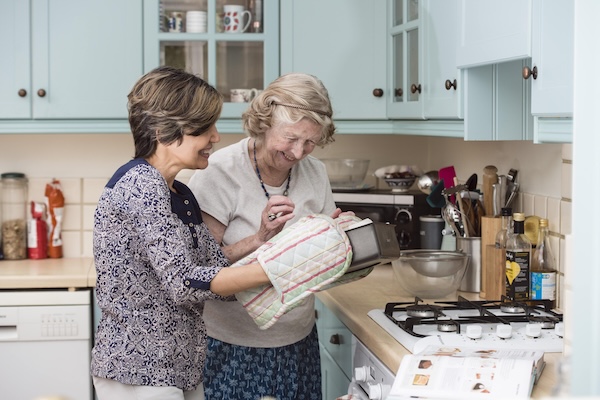
How to create a dementia-friendly home environment
Make your home safer and calmer for someone living with dementia. Practical, room-by-room advice from a doctor-founded care team.
Creating a dementia-friendly home environment is one of the most practical things a family can do to support someone living with dementia. The right changes reduce confusion, lower the risk of falls, and help the person feel calmer and more in control in familiar surroundings. Many of these adjustments cost very little and can be made without professional help.
Need Help Arranging Live-In Care?
Speak to our clinically-led team to find the right carer for your loved one. We'll guide you through costs, care options, and next steps.
Key Insights
- Small, targeted changes to lighting, colour, and layout can significantly reduce confusion and fall risk for someone living with dementia at home
- Dementia affects visual perception and depth judgement, which means the way a home looks matters as much as how it functions
- Keeping the home familiar and avoiding unnecessary changes to layout or exterior helps maintain orientation and reduce anxiety
- A dementia-friendly home environment works best alongside consistent, personalised support from a carer who understands both the space and the person
Why does the home environment matter for someone with dementia?
Around 944,000 people in the UK are currently living with dementia. The majority live at home, often supported by family members. Staying at home allows a person to maintain familiar routines, stay connected to the people and places they know, and hold on to a sense of independence for longer. For many families supporting someone to remain at home, the right environment is the foundation everything else builds on.
A space that is cluttered, poorly lit, or confusingly laid out can increase disorientation, trigger anxiety, and raise the risk of falls. A thoughtfully adapted space can do the opposite:
- Reduce daily frustration and confusion
- Support orientation and memory
- Lower fall risk
- Give both the person living with dementia and their family greater confidence
The good news is that meaningful change does not require a full renovation. Many of the most effective adjustments are simple, low-cost, and easy to reverse if they are not working.
How dementia affects the way a person sees their home
To understand why certain changes help, it’s worth understanding what dementia does to perception. The condition affects several areas of the brain, including those responsible for visual processing. This means that a person living with dementia may genuinely see their home differently from how others see it.
Common changes in perception include:
- Depth perception. A shadow on the floor can appear to be a step or a hole. A patterned rug can look raised or uneven. Dark flooring near a light-coloured room can look like the edge of a drop. These are not moments of confusion a person can reason through. They reflect a real change in how the brain processes visual information.
- Colour perception. Objects that blend into their surroundings become harder to identify. A white cup on a white surface, or a light-coloured toilet against pale tiles, can simply disappear from view. Contrast becomes essential.
- Memory and navigation. A person may no longer reliably remember which door leads to the bathroom, where mugs are kept, or which way the kitchen tap turns. Labels, visual cues, and consistent layouts reduce the cognitive load of navigating a home they may have lived in for decades.
Understanding this helps families see that home adaptations are not about treating someone as incapable. They are about making the environment work with a changed brain, rather than against it. Families who want to understand the broader picture of how dementia changes daily life will find Dementia UK’s guide to making the home safe for a person with dementia a useful complement to the practical steps below.
Room-by-room guide to a dementia-friendly home
The living room is usually where someone living with dementia spends most of their time, so it is a good place to start.
- Keep the layout consistent. Moving furniture, even temporarily, can disorient someone who is navigating by memory and habit rather than active spatial reasoning.
- Clear pathways. Remove low coffee tables, magazine stacks, and trailing cables. These are tripping hazards for anyone, but particularly for someone whose depth perception may be affected. Practical guidance on home safety without a full-time carer covers hazard removal in more detail.
- Fix frequently used items in place. Keep the remote control, reading glasses, and a glass of water visible and in the same spot every day.
- Reduce background noise. Turn off televisions or radios when they are not actively being used. Persistent background sound makes it harder to concentrate, follow a conversation, or process what is happening in the room. Familiar music played at a comfortable volume is often more calming than a television left on by default. Music therapy for dementia is an area with a growing body of evidence supporting its use as a calming and orienting tool.
- Add memory prompts. Photographs and meaningful objects placed around the room can support mood and orientation. Familiar faces, places, and mementos can trigger positive memories and help the person feel grounded in who they are. If reminiscence therapy is already part of the person’s routine, the living room is the natural space for it.
How do you make the kitchen safer for someone with dementia?
The kitchen carries more hazards than most rooms. A person living with dementia may forget that the hob is on, misjudge the temperature of water, or struggle to distinguish between similar-looking bottles. The following changes help:
- Make contents visible. Replace solid cupboard doors with glass-fronted ones where possible, or remove them entirely. Where that is not practical, stick a simple label or photograph on the front of each cupboard. Labels should be in plain, large text and placed at eye level.
- Keep frequently used items on the worktop. Out of sight tends to mean out of mind for someone living with dementia. The kettle, toaster, and a favourite mug should be easy to find without searching.
- Reduce hot water hazards. Clearly label hot and cold taps with text or colour-coded markings. A red sticker on the hot tap and a blue sticker on the cold tap is a small change that prevents scalding and remove guesswork.
- Use safer appliances. Consider a kettle tipper or an automatic shut-off appliance. These reduce kitchen hazards without restricting independence.
- Check food regularly. A person living with dementia may not notice or remember that food has gone out of date. Building a regular fridge and cupboard into the household routine prevents this from becoming a health risk.
- For families managing nutrition more broadly, fluid and diet management in dementia covers the specific challenges that arise as the condition progresses.
What changes should you make to the bathroom?
The bathroom is one of the most challenging rooms in the home for someone living with dementia. It is often small, filled with reflective or white surfaces, and requires a sequence of tasks that can become difficult to initiate or complete independently.
- Add colour contrast. A white toilet against a white floor and white walls is genuinely difficult for someone with affected visual perception to locate. A contrasting toilet seat, a different-coloured bath panel, or dark towels hung over a white rail make specific objects easier to identify.
- Install grab rails. Fit rails beside the toilet, bath, and shower if they are not already in place. These support safe movement without requiring help from another person. A raised toilet seat may also be worth considering for someone with limited mobility, and there is a range of bathing aids for older and disabled people that support safe, independent bathing.
- Consider mirrors carefully. Mirrors can be a specific source of distress for some people living with dementia. A person may not recognise their own reflection, leading to confusion or fear. Consider removing mirrors or replacing them with non-reflective alternatives, particularly in bedrooms where they may be encountered unexpectedly.
- Remove rugs and mats. These are trip hazards and, if patterned, may be misread as uneven surfaces. This applies throughout the home, but the bathroom floor is a particular priority given the risk of wet surfaces.
For families managing incontinence alongside dementia, clear, unobstructed access to the bathroom and consistent labelling of the door are especially important.
What lighting works best in a dementia-friendly home?
Good lighting is one of the most significant factors in how safe and comfortable a person living with dementia feels at home. Inadequate lighting increases confusion, raises fall risk, and makes it harder to carry out daily tasks independently.
Key lighting principles to follow:
- Maximise natural light. Keep curtains fully open during the day. Natural light supports the body’s circadian rhythm, which can already be disrupted in people living with dementia, and this matters for sleep quality and overall wellbeing. Sleep problems in older people are closely linked to dementia progression and are worth understanding alongside environmental changes.
- Use motion-sensor nightlights. Fitting these in hallways and bathrooms means a person does not have to find and operate a light switch when getting up during the night.
- Avoid fluorescent lighting. Fluorescent bulbs can flicker and create shadows. Bright, even, daylight-spectrum bulbs are a better choice for rooms where tasks are carried out.
- Reduce glare. Use sheer curtains rather than heavy blinds on sunny days. Shadows and glare can both create visual confusion and increase fall risk.
- Manage the transition to evening. A consistent level of light throughout the day, with a gradual transition as evening approaches, can help manage sundowning, a period of increased confusion and agitation that many people living with dementia experience around dusk. Dementia UK notes that drawing curtains and turning lights on before it gets dark may ease this transition and reduce distress.
How can labelling and signage help someone living with dementia?
Clear labelling throughout the home reduces the cognitive effort of navigating a familiar space. It also preserves independence: a person who can find their own way to the bathroom without assistance is able to maintain privacy and dignity in a way that matters.
Practical labelling tips:
- Start with doors. A simple word or picture on each door, placed at eye level, tells the person what is behind it without requiring them to remember or guess. The bathroom, kitchen, and bedroom are the priority.
- Label inside cupboards and drawers. A picture of a knife and fork on the cutlery drawer, or the word “mugs” on the relevant cupboard, allows the person to navigate independently.
- Keep labels consistent. Do not change them frequently, or remove them when visitors are coming. Consistency is what makes labelling effective over time.
- Use plain, large text. Decorative fonts and small print are harder to read. Simple, bold text at eye level works best.
For families where challenging behaviour has become a concern, clear environmental signposting can reduce some of the frustration and agitation that arises when a person cannot find what they need.
What technology aids help people living with dementia at home?
Technology cannot replace human support, but it can extend the range of tasks a person is able to manage independently and give families greater reassurance. The most useful aids are simple and unobtrusive.
- Dementia-specific clocks. Clocks that display the day, date, and time in large, clear text are among the most widely used aids. Knowing whether it is morning or evening, a weekday or a weekend, anchors a person in time and reduces disorientation.
- Automated medication dispensers. These remind a person when to take their medication and dispense the correct dose. Managing medication in dementia is one of the most common concerns for families, and an automatic pill dispenser removes much of the associated daily anxiety.
- GPS locators. Worn as a watch or pendant, these provide reassurance if the person is at risk of becoming lost when outdoors.
- Automatic shut-off appliances. These reduce kitchen hazards without restricting independence. Sensor-activated taps and thermostatic shower controls manage water temperature without requiring the person to adjust taps themselves.
- Smart speakers and voice-activated devices. Use caution here. These can be genuinely useful for playing music or setting reminders, but they can also cause confusion or distress if a person does not understand what they are interacting with.
How does a live-in carer support a dementia-friendly home?
Home adaptations create a safer and more navigable space, but they work best alongside consistent human support. For families considering live-in dementia care, a carer who is present in the home provides continuity that no physical change to a room can replicate.
A good carer does not simply carry out tasks. They:
- Learn the person’s preferences and daily routines
- Understand how the individual’s dementia affects their experience of the home
- Adapt their approach as needs change over time
- Maintain the consistency and familiarity that reduces anxiety
- Support meaningful activities that keep the person engaged and connected within their home environment
Hometouch matches each person living with dementia with a carer suited to their individual needs and personality. Families choose from recommended carer profiles rather than having someone assigned to them. The clinical team is available throughout to support both the carer and the family as circumstances change.
For families not yet ready for full-time support, respite care can provide temporary cover while a regular carer takes a break, or give a family member a period of rest. Understanding the signs that behaviour is changing can also help families judge when it is time to increase the level of support.
Can you get help funding home adaptations for dementia?
Some home adaptations may be funded through local authority support or the Disabled Facilities Grant. A formal care assessment, requested through the local authority, is the starting point for understanding what support may be available. An occupational therapist can assess the home and make specific recommendations for adaptations.
For families exploring funding for ongoing care:
- Hometouch’s guide to funding live-in care covers the range of options available, including personal budgets and local authority contributions
- The guide to NHS Continuing Healthcare and dementia explains how clinical need is assessed and what it may cover
- Families who hold a personal health budget can use it to arrange live-in care directly
- A social services carer’s assessment may also identify support available to the family member providing care at home
It is worth noting that many of the most effective home adaptations cost very little. Labels, contrast-coloured toilet seats, and nightlights are all low or no-cost interventions with a significant practical impact.
Creating a dementia-friendly environment: Frequently asked questions
What makes a home dementia-friendly?
A dementia-friendly home reduces unnecessary confusion, lowers the risk of falls, and makes it easier for a person living with dementia to navigate and carry out daily tasks independently. Key features include good lighting, colour contrast between objects and their surroundings, clear labelling, clutter-free pathways, and a consistent, familiar layout. Changes should be tailored to the individual, as dementia affects everyone differently.
How can I reduce fall risk at home for someone with dementia?
Remove rugs, mats, and trailing cables from walkways, and ensure all areas of the home are well-lit, including at night. Install grab rails in the bathroom and on stairways. Choose non-slip flooring rather than high-gloss or polished surfaces. Keep pathways clear of furniture and clutter, and avoid changing the layout of rooms without good reason, as familiar routes support safe navigation. Hometouch’s guide to fall prevention in older people covers this in more detail.
Does dementia affect the way a person sees their home?
Yes. Dementia commonly affects depth perception and the ability to distinguish objects from their surroundings. A person may misread a shadow as a step, struggle to identify a white toilet against a pale floor, or find patterned carpets visually confusing. This is why contrast, lighting, and avoiding busy patterns are important elements of a dementia-friendly home. These changes address genuine shifts in how the brain processes visual information, not just surface-level comfort.
When should a family consider additional support alongside home adaptations?
Home adaptations are most effective when the person can still manage periods alone safely. As dementia progresses, there may come a point where the home environment alone is not enough to ensure safety and wellbeing. Signs that additional support may be needed include increased disorientation, difficulty managing personal care, disrupted sleep, or signs of anxiety and distress at home. Live-in care for dementia provides continuous one-to-one support in the home, and understanding at what point 24-hour care becomes necessary can help families plan ahead rather than react in a crisis.
Should you remove mirrors from a home for someone with dementia?
Mirrors can cause distress for some people living with dementia, particularly if the person does not recognise their own reflection. This can lead to confusion or fear, sometimes on a recurring basis. Whether to remove mirrors depends on the individual. If a person is showing signs of distress in front of mirrors, it is worth trying to remove or cover them, starting in bedrooms and hallways where mirrors are most likely to be encountered unexpectedly.
Making a home dementia-friendly does not have to be an overwhelming project. The changes that make the greatest difference are often the simplest: better lighting, clear labels, contrast where it matters, and a consistent, familiar layout. Starting with one room, making adjustments, and observing what helps gives families a practical way forward without needing to change everything at once.
As dementia progresses, the support that works alongside a well-adapted home may also need to grow. Hometouch provides personalised live-in care for dementia, matching each person with a carer who understands both their clinical needs and who they are as an individual. Our clinical team is available throughout to guide families as circumstances change.
Related Care Advice



Medically reviewed on Jul 23, 2026

Dr Jamie Wilson is hometouch's founder and Chief Executive Officer. Jamie's creation of hometouch was inspired by his work as a dementia psychiatrist in the NHS, and he has written about healthcare issues in The Times and the Evening Standard.